Sub-Etha Press · Books for Builders
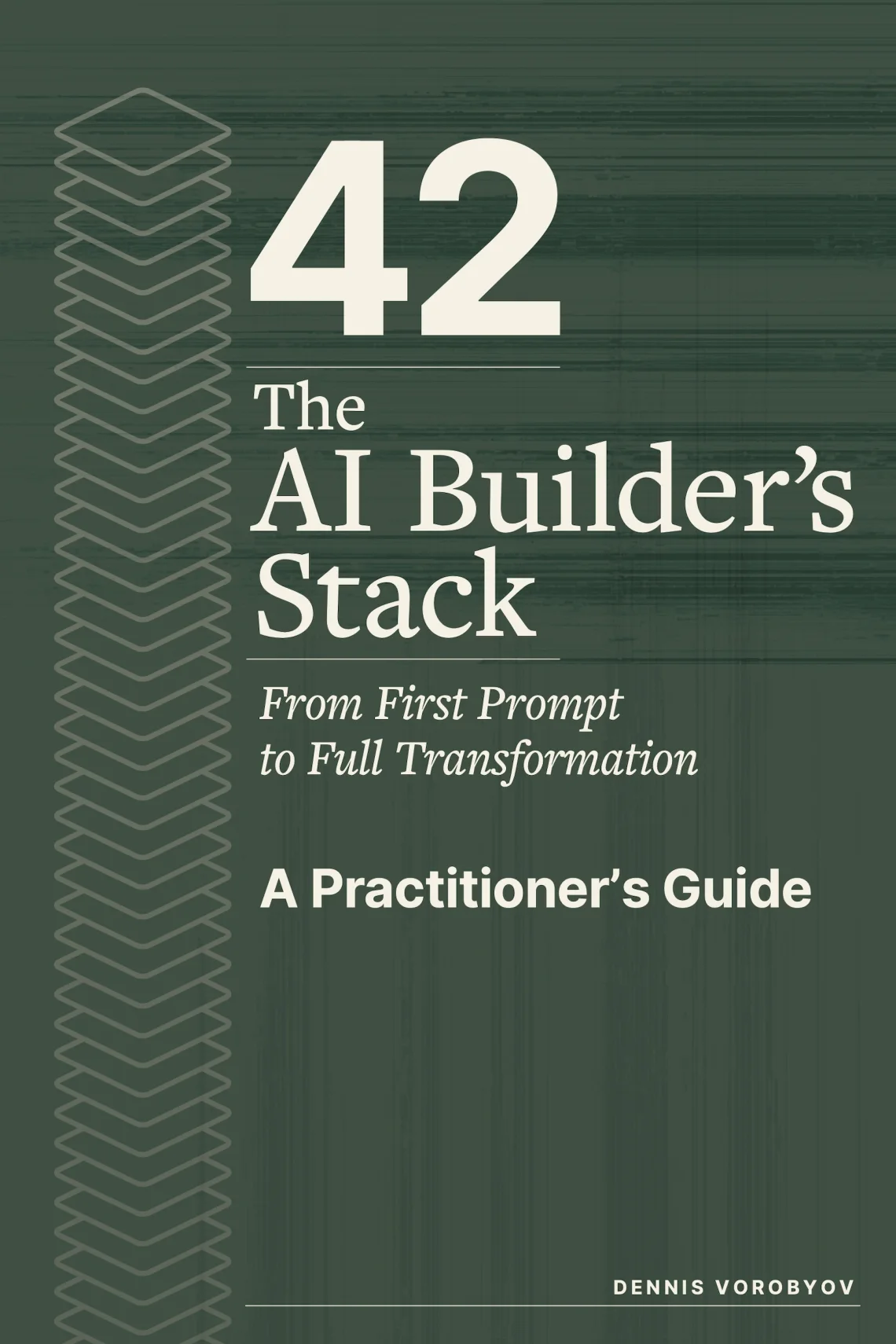
42 The AI Builder’s Stack
From First Prompt to Full Transformation. A Practitioner’s Guide.
The exact stack one software studio uses to run a real business with AI at every layer. Twenty-two chapters, each from absolute zero to deeper than most paid courses, written by the CEO who reworked 90 percent of his company’s workflows around AI and kept what survived. No sponsors. No affiliate links. No reason to be nice about any product.
Kindle $9.99 · Paperback $24.99 · Hardcover $39.99 · 396 pages
Once you build with AI, the old way stops making sense.
Introduction
Inside the book
Six parts. Twenty-two chapters. Zero to deep on each.
Every chapter begins from absolute zero and goes deep. Skip what you know. Dive into what you don’t.
From the introduction
The guerrilla guide to aifying your organization – without hiring a Chief AI Officer.
Chapter 21 · AI Transformation for Small Teams
- 20 Chinese vs US AI Models 287
- 21 AI Transformation for Small Teams 301
- 22 Who to Follow 317
Agentic workflows are the most powerful and most overhyped capability in AI development right now.
Chapter 17 · Agentic Workflows
- 17 Agentic Workflows 249
- 18 OpenClaw + Composio 263
- 19 Voice AI 275
The most powerful AI extension you’ll ever build is a Markdown file.
Chapter 13 · Claude Skills
- 12 MCP vs API 183
- 13 Claude Skills 197
- 14 OpenRouter 211
- 15 Playwright 223
- 16 CodeRabbit 237
The blank screen is closer to the live site than ever. The distance that remains is taste, review, and security. Those are human skills. They always will be.
Chapter 11 · Building a Website from Scratch
- 8 Writing PRDs 109
- 9 Supabase 131
- 10 Vercel and Render 149
- 11 Building a Website from Scratch 163
Your AI engineer lives in the terminal now.
Chapter 6 · Claude Code
- 4 Warp 51
- 5 GitHub 63
- 6 Claude Code 79
- 7 AI-Powered IDEs, Harnesses, and Your Dev Environment 93
Claude is the most brilliant employee you’ve ever hired, with total amnesia at the start of every conversation.
Chapter 1 · Talking to Claude
- 1 Talking to Claude 3
- 2 NotebookLM & AI Research Tools 21
- 3 Obsidian 33
Plus a prologue, an epilogue, a 16-page glossary, and 47 pages of notes and sources.
Who it’s for
Non-technical founders and CEOs who want to stop depending on others for every small task and be dangerous enough to prototype their own ideas.
Developers and engineers who have used Copilot or ChatGPT casually and have not assembled the full AI-augmented workflow: terminal, IDE, version control, database, deployment, testing, review, agents.
Product managers, operators and consultants who work with technical teams and want to know what their engineers are actually using, and why.
Small team leaders who want to aify how their organization works without a Chief AI Officer, a six-figure engagement, or a formal AI strategy. Chapter 21 is for you.
Anyone tired of listicles who has read the top-ten-tools articles and still does not know where to start.
Praise
“I feel like this book is the 2026 guide to going from zero to a human supercomputer.”
“A hands-on guide that speaks the language of real developers building real systems.”
“For founders who want to stop playing with AI and start building. You’ll learn which tools matter, where they break, and what still shouldn’t be delegated.”
“A rare book for two readers at once: it makes non-coders dangerous enough to prototype, and gives coders a fast on-ramp to AI-native building.”
Three ways to read
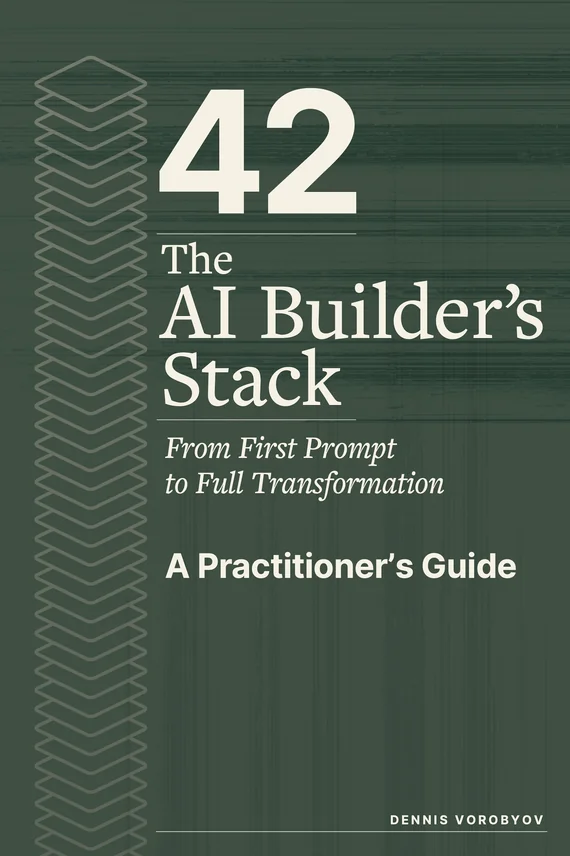
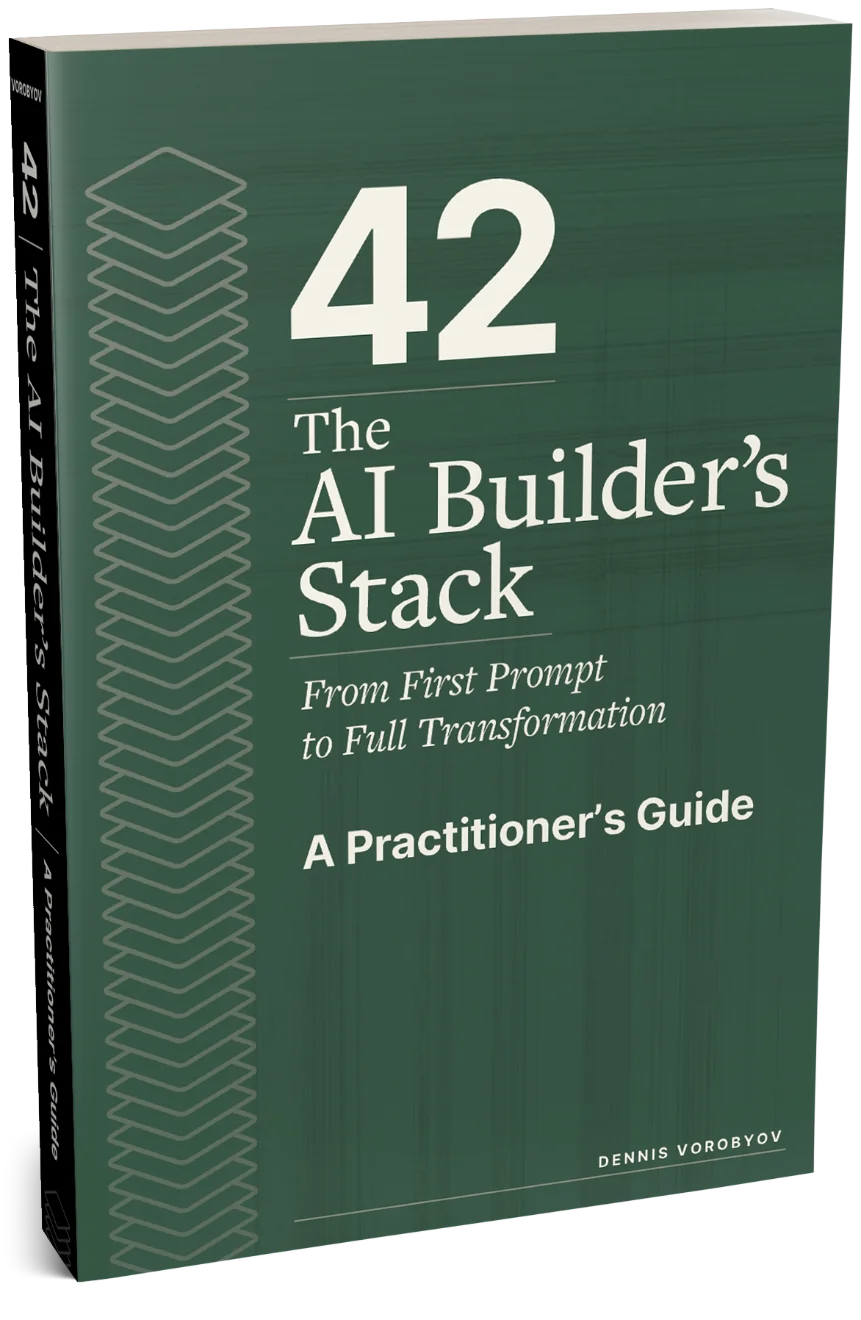
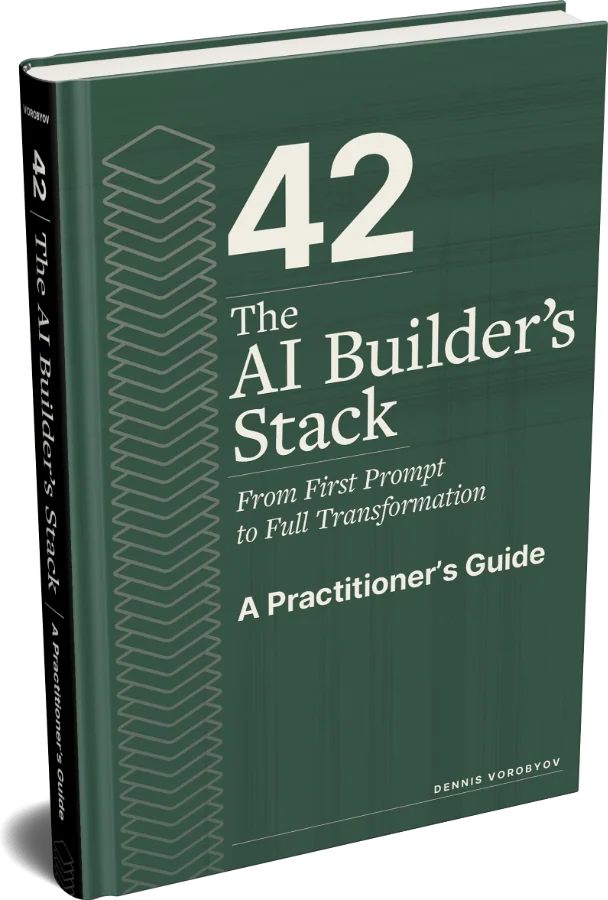
All three editions are sold by Amazon. The text is identical.


About the author
Dennis Vorobyov

The builder’s stack was the right place to start.
What’s Next, p. 396